
You may love your home, your neighbors, and the life you’ve built there. But as you get older, you might start wondering whether your home will continue to meet your needs in the years ahead.
Maybe the stairs are becoming less convenient, the yard requires more maintenance than you’d like, or you’re thinking about living closer to family. Perhaps your home still works beautifully, and you simply want to make sure it stays that way.
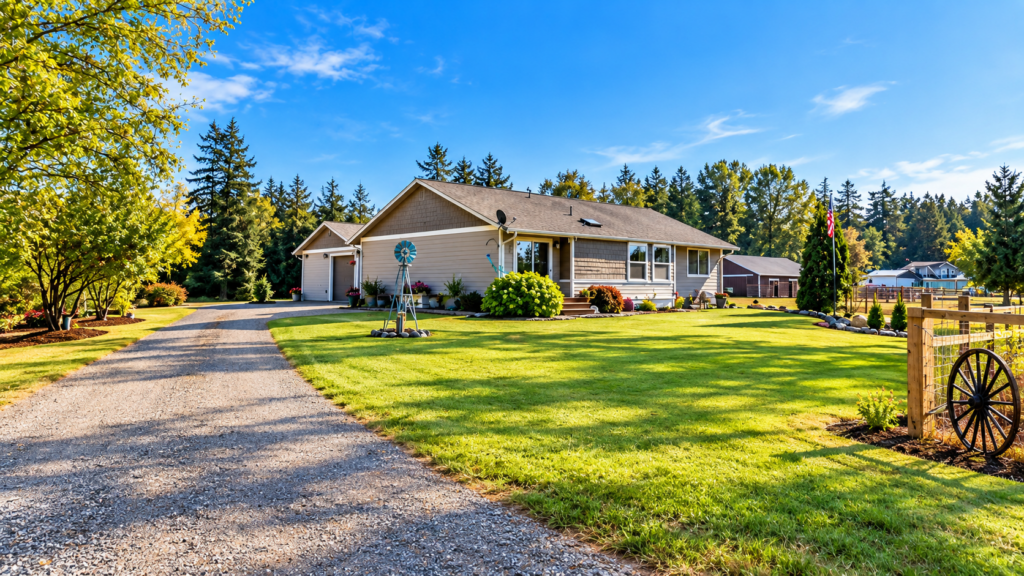
For homeowners in Stanwood and on Camano Island, the decision to age in place or move can involve some unique considerations, particularly if you live on acreage, have a multilevel home, or are considering multigenerational living.
There isn’t one right answer. The important thing is understanding your options before making a decision.
Can You Comfortably Age in Place in Your Current Home?
Aging in place means continuing to live in your own home as you get older, rather than moving because your housing needs have changed.
For many homeowners, staying put is appealing. You know the neighborhood, you’ve established routines, and your home holds years of memories.
But it’s worth looking beyond how well the house works for you today.
Consider how easily you could manage daily activities if your mobility changed. Is your primary bedroom on the main floor? Can you enter the house without climbing stairs? Would the bathrooms accommodate a walker or other mobility equipment if needed?
According to research from the Harvard Joint Center for Housing Studies, fewer than 4% of U.S. homes have all three of these accessibility features: single-floor living, a no-step entry, and sufficiently wide doors and hallways.
That doesn’t mean everyone needs to remodel. It does suggest that many homes weren’t originally designed with changing mobility needs in mind.
For some homeowners, relatively simple improvements may be enough. Others may need more extensive changes to make their homes comfortable and accessible.
What Would It Cost to Make Your Home Work for You?
Before deciding to move, it can be helpful to understand what modifications your existing home would actually require.
Common aging-in-place improvements include:
- Installing grab bars and improving bathroom safety.
- Replacing a traditional bathtub with a walk-in or curbless shower.
- Adding handrails, ramps, or a no-step entrance.
- Improving lighting and reducing tripping hazards.
- Widening doorways or modifying interior layouts.
- Creating a main-floor bedroom or bathroom when practical.
Not every homeowner needs every improvement. A home with a main-floor primary suite and accessible entry may already have many of the features you want.
The National Association of Home Builders has identified aging-in-place remodeling as an established part of the remodeling industry, with projects ranging from modest safety improvements to larger accessibility renovations.
Before committing to a major project, consider getting estimates from qualified contractors. For accessibility-related changes, an occupational therapist or aging-in-place specialist may also help identify which improvements would be most useful.
You’ll want to consider more than the construction cost. Think about the disruption during remodeling, whether the changes will meet your long-term needs, and how much ongoing property maintenance you’ll still have afterward.
A beautifully remodeled bathroom won’t necessarily solve the challenge of maintaining several acres of property.
Living on Acreage in Stanwood or Camano Island Adds Another Consideration
One of the reasons people enjoy living in this area is the opportunity to have more space. Larger lots, gardens, detached shops, and room for animals can be wonderful features of a property.
But those same features can become more demanding over time.
If you own acreage, think about how much work goes into maintaining the property. That may include mowing, fencing, driveway maintenance, tree care, and upkeep of outbuildings.
Rural properties may also have private wells and septic systems that require ongoing attention.
None of this automatically means you should move. Some homeowners genuinely enjoy maintaining their properties and want to continue doing so for as long as possible.
Others may decide that hiring help makes more sense than leaving a home they love.
The question is whether the property still supports the lifestyle you want, including the time, expense, and physical effort involved in maintaining it.
Location matters, too. Depending on where you live, consider how convenient it is to reach medical appointments, grocery stores, and other services, particularly if driving becomes more difficult.
Moving Doesn’t Have to Mean Moving Into a 55+ Community
When homeowners begin thinking about downsizing, 55+ communities often come up in the conversation. They can be a good fit, but they’re certainly not the only option.
You might prefer a smaller single-level home in a traditional neighborhood, a condominium with exterior maintenance handled by an association, or a home closer to family and everyday services.
A 55+ community may offer shared amenities, organized activities, and opportunities to connect with neighbors. However, the features and responsibilities vary considerably from one community to another.
Before choosing one, it’s important to understand the monthly dues, association rules, maintenance responsibilities, and whether the community provides the amenities or services you actually want.
Also, a 55+ community isn’t necessarily an assisted-living community. Most age-restricted residential communities do not automatically provide personal care or medical services.
The right choice depends on what you’re looking for. Some people enjoy organized activities and shared amenities. Others would rather have a quiet neighborhood and fewer responsibilities.
Could Multigenerational Living Be an Option?
Another possibility worth considering is living closer to family, or even sharing a property while maintaining separate living spaces.
Multigenerational housing can take several forms. It might be a home with separate living quarters, a property with an accessory dwelling unit (ADU), or two homes located next to each other.
This arrangement may allow family members to support one another while maintaining privacy and independence.
It’s an option I understand personally. My family chose a multigenerational living arrangement in Stanwood, with my mother and brother living next door. Having family nearby while maintaining our own homes was an important part of that decision.
Of course, what works for one family may not work for another.
If you’re considering an ADU or converting part of a home into separate living quarters, you’ll need to understand applicable zoning, permitting, utility, and property requirements. Those details can vary depending on whether a property is within city limits or in an unincorporated area.
It’s worth investigating those requirements before assuming a property can accommodate the arrangement you have in mind.
How Does Your Home Equity Affect the Decision?
For homeowners who have owned their properties for many years, home equity may provide additional options.
Equity is the difference between your home’s current market value and what you owe against it.
If you’ve paid down your mortgage or your property has increased in value, you may have equity that could help fund a move or home improvements.
But equity isn’t the same as cash in your pocket.
If you sell, you’ll need to account for your remaining mortgage balance, selling expenses, and any other obligations associated with the property. You’ll also want to understand what a replacement home would cost and how the move might affect your ongoing expenses.
For some homeowners, selling a larger property and purchasing a smaller one may reduce maintenance responsibilities or monthly expenses.
For others, staying in a home with a low mortgage payment, or no mortgage at all, may make better financial sense.
And if you’re considering using equity to finance renovations, it’s important to understand the borrowing costs and repayment obligations.
A conversation with a financial or tax professional can help you evaluate the financial implications alongside your housing options.
Compare the Lifestyle, Not Just the Houses
One of the most useful things you can do before making a decision is think about what you want your everyday life to look like five or ten years from now.
Do you want to spend less time maintaining your property? Would you like to travel more? Is being closer to family becoming more important? Would you prefer to be within walking distance of shops and services?
You may discover that your current home can accommodate those goals with a few adjustments.
Or you may realize that another type of property would make daily life easier.
There’s also nothing wrong with deciding to stay where you are while making a longer-term plan. You don’t have to wait until maintaining your home becomes difficult, but you don’t need to move simply because you’ve reached a certain age, either.
Before You Decide, Understand Both Options
If you’re considering aging in place or moving, I’d suggest starting with two pieces of information: what it would realistically take to make your current home work for the years ahead, and what your housing options would look like if you decided to sell.
That includes understanding your home’s potential market value, estimated selling expenses, and the types of properties available within your preferred area and budget.
As a Managing Broker and REALTOR® serving Stanwood, Camano Island, and surrounding communities, I can help you understand the real estate side of that decision, including how your current property compares with the options available to you.
Whether you decide to renovate, downsize, move closer to family, or stay exactly where you are, the goal is to make a decision that supports the life you want to live.