
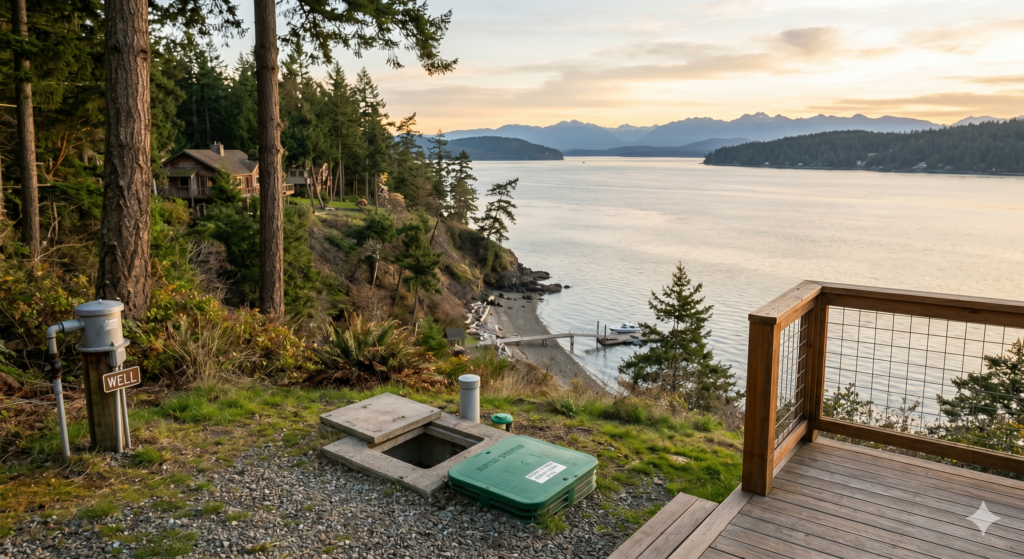
If you’re thinking about buying a home on Camano Island, you’re looking at one of the most unique real estate markets in the Pacific Northwest. Camano offers a slower pace, beautiful shoreline, wooded acreage, and a wide variety of properties — from cozy inland homes to high-bank and low-bank waterfront estates.
But buying on Camano Island is not quite the same as buying in a typical suburban neighborhood.
Many homes rely on private wells instead of city water. Many properties use septic systems rather than public sewer. And if you’re buying waterfront, there are additional considerations that can affect insurance, maintenance, access, and long-term value.
If you understand those factors upfront, you can buy with confidence. If you don’t, you may end up surprised by costs, limitations, or maintenance responsibilities after closing.
Here’s what I want every Camano Island buyer to know before making an offer.
Why Buying on Camano Island Is Different
One of the biggest reasons buyers fall in love with Camano is the lifestyle. You can find:
- Waterfront homes with expansive Puget Sound views
- Acreage properties with privacy and room to breathe
- Homes tucked into quiet beach communities
- Year-round living with a vacation-home feel
- Easy access to Stanwood and the mainland without needing a ferry
But with that charm comes a different set of property systems and due diligence items than many buyers are used to.
On Camano Island, it’s common to encounter homes with:
- Private wells
- Septic systems
- Shared beach access or community waterfront rights
- Bulkheads, stairs, docks, or shoreline structures
- Sloped lots, bluff properties, or shoreline setbacks
- Flood, drainage, or erosion considerations depending on location
These are not deal-breakers. In fact, they’re often part of what makes island properties so appealing. The key is knowing how to evaluate them before you buy.
1) What Buyers Need to Know About Private Wells
If you’re moving from an area with city water, a private well may feel unfamiliar at first. On Camano Island, though, well water is a normal part of homeownership for many properties.
A well isn’t automatically a problem — but it does need to be understood
A private well means the home gets its water from an on-site or shared well rather than a municipal water system. That can be perfectly fine, but buyers should make sure they understand:
- Where the well is located
- Whether it is private or shared
- Whether there are recorded agreements for shared use
- Water quality and potability
- Flow rate / production
- Any treatment systems currently in place
- Age and condition of well components such as pumps, pressure tanks, and filtration systems
Well questions to ask before buying
When reviewing a Camano Island property with a well, I recommend asking:
1. Is it a private well or a shared well?
A shared well isn’t necessarily a negative, but you want to know:
- How many homes share it
- Whether there is a formal shared well agreement
- How maintenance and repair costs are divided
- Whether there have been any past disputes or supply issues
2. Has the water been tested recently?
A current water test can help identify issues related to:
- Bacteria
- Nitrates
- Arsenic or other contaminants depending on area and history
- General water quality concerns such as hardness, iron, or sulfur
3. What is the well’s flow rate?
Low production can become a practical issue depending on household size and water usage. A flow test can help you understand whether the system is producing at a level appropriate for the home.
4. Are there filtration or treatment systems installed?
Some homes have water softeners, sediment filters, UV treatment, or other systems. Those may be routine and beneficial, but you’ll want to know:
- Why they were installed
- Whether they’re owned or leased
- How often they require service
- Whether replacement may be needed soon
5. Are there records available?
Well records, maintenance history, repair invoices, and water test reports can all be helpful during due diligence.
My advice on wells
Don’t panic just because a home has a private well. Instead, treat it like any other major property system: inspect it, test it, understand it, and budget for future maintenance.
2) What Buyers Need to Know About Septic Systems
Septic is another area where mainland buyers can feel uncertain, but on Camano Island it’s simply part of the landscape for many homes.
A septic system is the home’s wastewater treatment system when public sewer isn’t available. If the system is functioning properly and has been maintained, it may serve the home well for many years. Problems usually arise when buyers skip due diligence or assume everything is fine without documentation.
Septic due diligence matters — a lot
Before buying a Camano Island home with septic, you want to know:
- What type of septic system the home has
- When it was last inspected or pumped
- Whether it is currently functioning properly
- What size the system is approved for
- Whether there have been repairs, failures, or modifications
- Where the tank and drain field are located
- Whether any structures, driveways, patios, or landscaping may affect the system
Septic questions to ask before buying
1. When was the septic system last inspected?
A recent inspection can help reveal:
- Current condition
- Signs of failure
- Maintenance needs
- Whether pumping is recommended
2. What size is the septic system approved for?
This is a very important detail. A home may physically have more rooms than the septic system is approved to serve. Buyers should verify the system’s approved capacity rather than assume the current layout tells the whole story.
3. Are there records of pumping, inspection, or repair?
Documentation matters. If the seller has receipts or reports showing consistent maintenance, that’s a good sign.
4. Are there any signs of trouble?
Potential red flags can include:
- Slow drains
- Sewage odors
- Wet spots near the drain field
- Lush green patches over the system area
- Backup history
- Unclear or missing system records
5. Where are the septic components located?
You’ll want to know where the tank, reserve area, and drain field are — especially if you plan to add a shop, ADU, patio, parking area, or landscaping later.
My advice on septic
A septic system doesn’t have to be scary, but it should never be treated casually. A proper septic inspection is one of the smartest investments you can make during the inspection period.
3) Buying Waterfront Property on Camano Island: What’s Different?
Waterfront homes are often the properties buyers dream about most on Camano Island — and for good reason. The views can be incredible, the setting can feel peaceful and private, and direct beach access or shoreline proximity can create a lifestyle that’s hard to replicate anywhere else.
But waterfront ownership comes with another layer of due diligence.
Not every waterfront property is the same.
On Camano Island, buyers may encounter:
- High-bank waterfront
- Low-bank waterfront
- No-bank or near-beach access properties
- Community waterfront access
- Tideland questions
- Bulkheads, stairs, decks, or shoreline stabilization systems
All of these can affect usability, maintenance, insurance, and future improvements.
Waterfront questions to ask before buying
1. What kind of waterfront is it?
A bluff-top home with panoramic views may offer a very different ownership experience than a low-bank property with easier beach access. Buyers should understand whether the appeal is primarily view-oriented, access-oriented, or both.
2. Is the beach privately owned, shared, or community-access only?
This is one of the most important questions in any waterfront transaction. Don’t assume that “waterfront” means the same thing from one listing to the next. Clarify:
- What land is actually included in the sale
- Whether tidelands are included
- Whether access is private, shared, or community-based
- Whether there are easements affecting shoreline use
3. Are there bulkheads, stairs, or shoreline structures?
If so, ask about:
- Condition
- Permits if applicable
- Maintenance history
- Any recent storm damage or repair needs
- Whether replacement or reinforcement may be needed in the future
4. Are there erosion, drainage, or bluff stability concerns?
Not every waterfront home has these issues, but waterfront and bluff properties deserve careful review. Depending on the property, buyers may want to understand:
- Surface water drainage patterns
- Bluff or slope conditions
- Past erosion control work
- Any geotechnical reports or shoreline-related disclosures
5. Is flood insurance a factor?
Some waterfront or low-lying properties may have different insurance considerations than inland homes. This is something worth checking early, especially if monthly payment estimates matter to your budget.
6. Are there restrictions on future improvements?
Shoreline regulations, setbacks, septic placement, easements, and lot conditions can all affect what you can build or change later. If your plan includes adding a deck, stairs, guest space, or other improvements, ask those questions before closing.
My advice on waterfront
Waterfront homes can be wonderful purchases, but they are not the time to rush due diligence. The more unique the property, the more important it is to understand the details behind the view.
4) Due Diligence Matters More on Camano Than in a Typical Neighborhood
If you take one thing away from this guide, let it be this:
On Camano Island, a smart buyer asks more questions — not because something is wrong, but because unique properties require better information.
For many homes, I strongly recommend buyers review some combination of:
- Home inspection
- Septic inspection
- Water quality test
- Well flow information where relevant
- Seller disclosures
- Utility and maintenance records
- Shoreline, drainage, or structural information for waterfront homes
- HOA or community beach access documents if applicable
- Insurance quotes early in the process for unusual or waterfront properties
Every property is different, so due diligence should match the property itself.
A standard suburban resale home on public water and sewer may need one level of review. A waterfront bluff property with a private well and septic system may need a more layered approach.
That doesn’t mean you shouldn’t buy it. It just means you should buy it with your eyes open.
5) The Biggest Mistake Camano Island Buyers Make
The most common mistake I see is assuming that a beautiful property is a simple property.
A home can show beautifully online, have incredible views, and still come with questions that deserve answers before you commit. Buyers sometimes focus so heavily on layout, finishes, and location that they don’t spend enough time understanding the systems and property features that matter most on island homes.
That’s where local guidance makes a real difference.
When you work with someone who understands Camano Island, you’re not just getting help writing an offer. You’re getting someone who knows what questions to ask, which inspections matter most, and where buyers often overlook risk.
Final Thoughts: Camano Island Is Worth Doing Right
Camano Island offers something special. For many buyers, it’s the perfect blend of scenery, privacy, community, and everyday livability. But because so many properties involve wells, septic systems, and waterfront considerations, buying here requires a little more care than the average transaction.
That’s not a reason to avoid it. It’s simply a reason to be prepared.
If you’re considering a home on Camano Island, the goal isn’t to be intimidated by wells, septic, or shoreline issues. The goal is to understand them early, ask the right questions, and move forward with confidence.
When you do that, you put yourself in a much better position to buy the right home — and enjoy everything island living has to offer.